
Overview
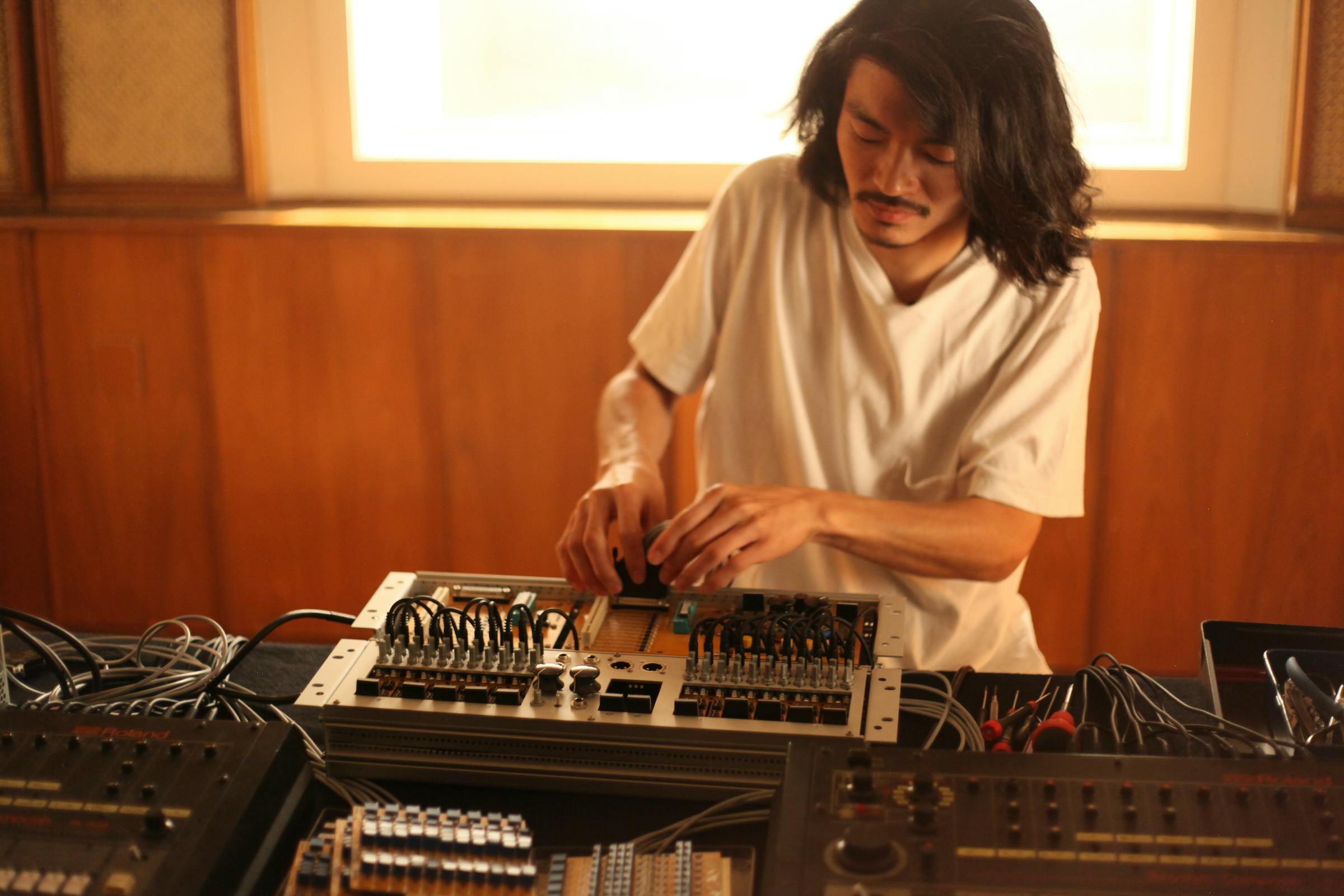
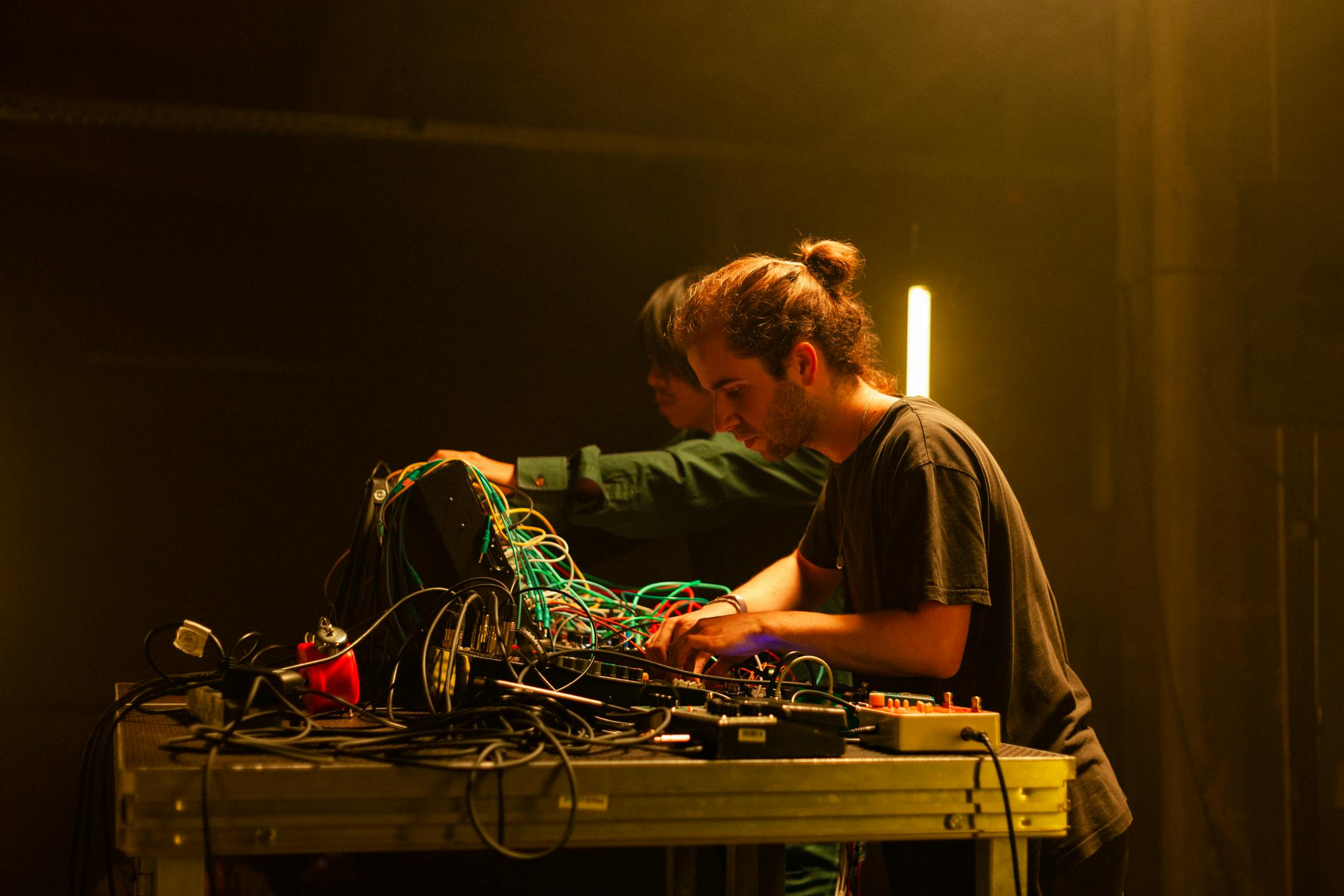
Our Electronic Music Production & Performance BA is a project-based programme for musicians who want to compose, produce, perform and publish their own music. You'll explore electronic sound and music from fundamental principles, and work within a community of artists with a wide range of practices and stylistic interests. This range of perspectives helps you situate your work and define your own creative direction.
Develop work from concept to finished outcome: design original sounds, record and mix in a range of professional studios, build and code your own instrumental systems, and shape performances using a wide range of hardware and software technologies. Engage with diverse styles, ideas, traditions, techniques, and technologies, while developing a clear artistic voice.
This programme supports technical development, critical and conceptual thinking, and sustained creative growth. Through experimentation, practice, reflection, and feedback, you'll learn to refine your methods, take informed creative risks, and build a long-lasting career.
You can study this programme either as a full three-year BA degree or the first year only as a one-year HE Certificate.
Key skills you’ll gain
Throughout this course, you’ll develop the creative, conceptual and technical skills needed to bring your musical ideas to life in both recording and performance. You’ll build confidence in your artistic identity and develop a clear basis for decision-making in the studio and on stage.
- Skills in composition, production, performance, and electronic sound design
- A confident knowledge of synthesisers, samplers, DAWs, and related tools, and how to use them creatively
- The ability to design, build, code, or assemble original musical instruments in hardware and software form
- The ability to take a project from initial concept to a finished outcome
- A clearer understanding of your artistic identity and working methods
- Real-world experience through collaboration, critique, and public presentations
- The perspective and habits needed to keep developing artistically and professionally over the long term
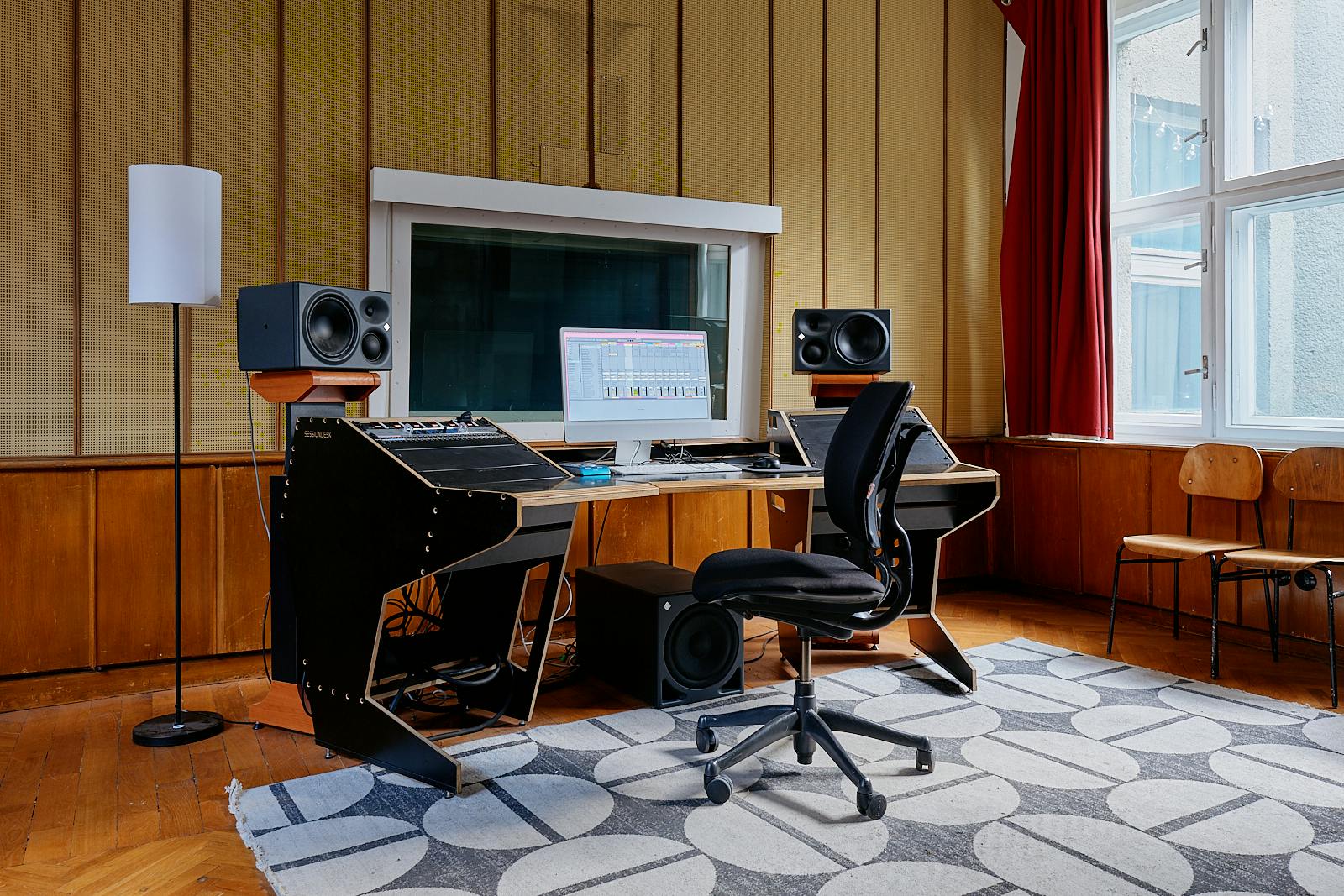
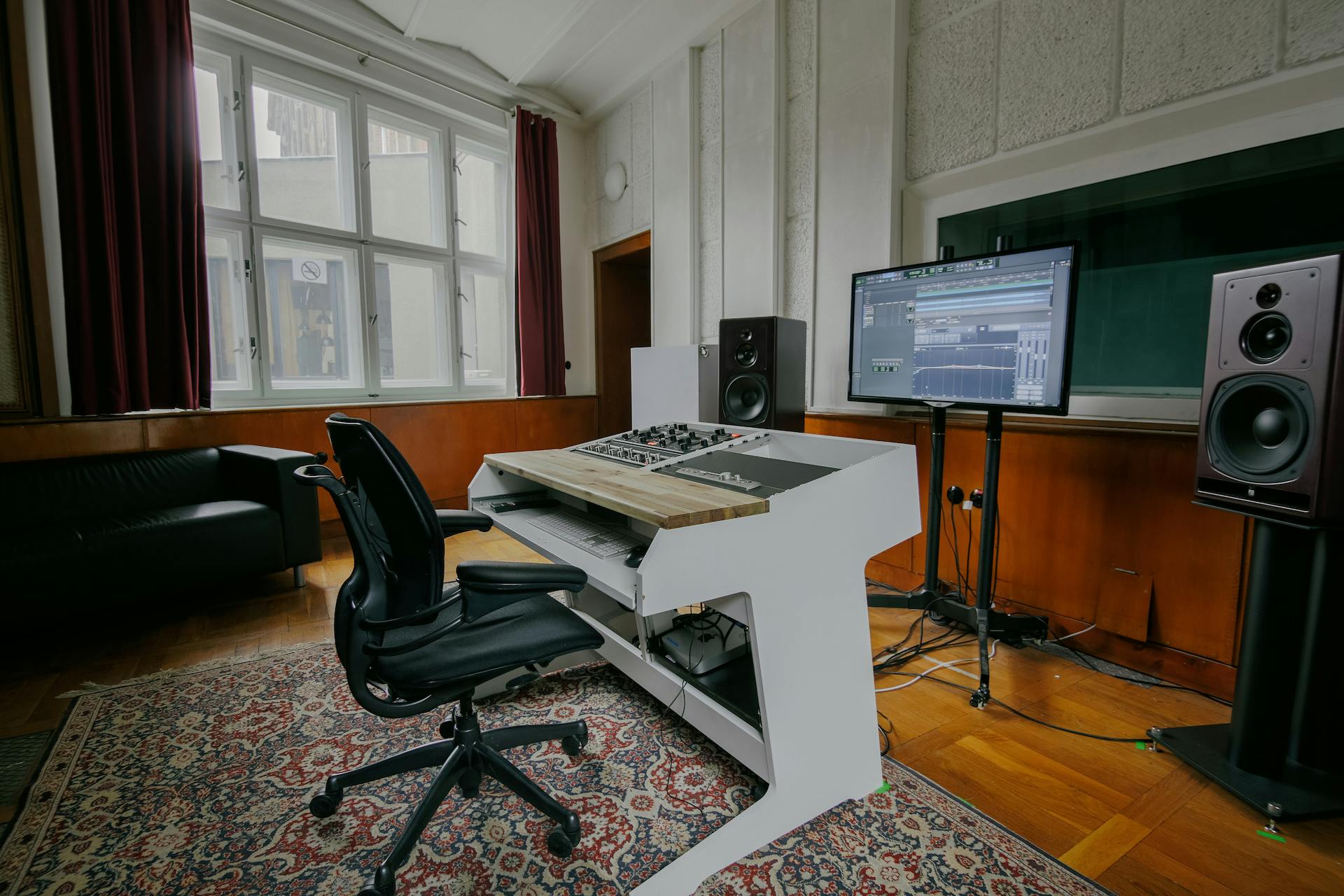
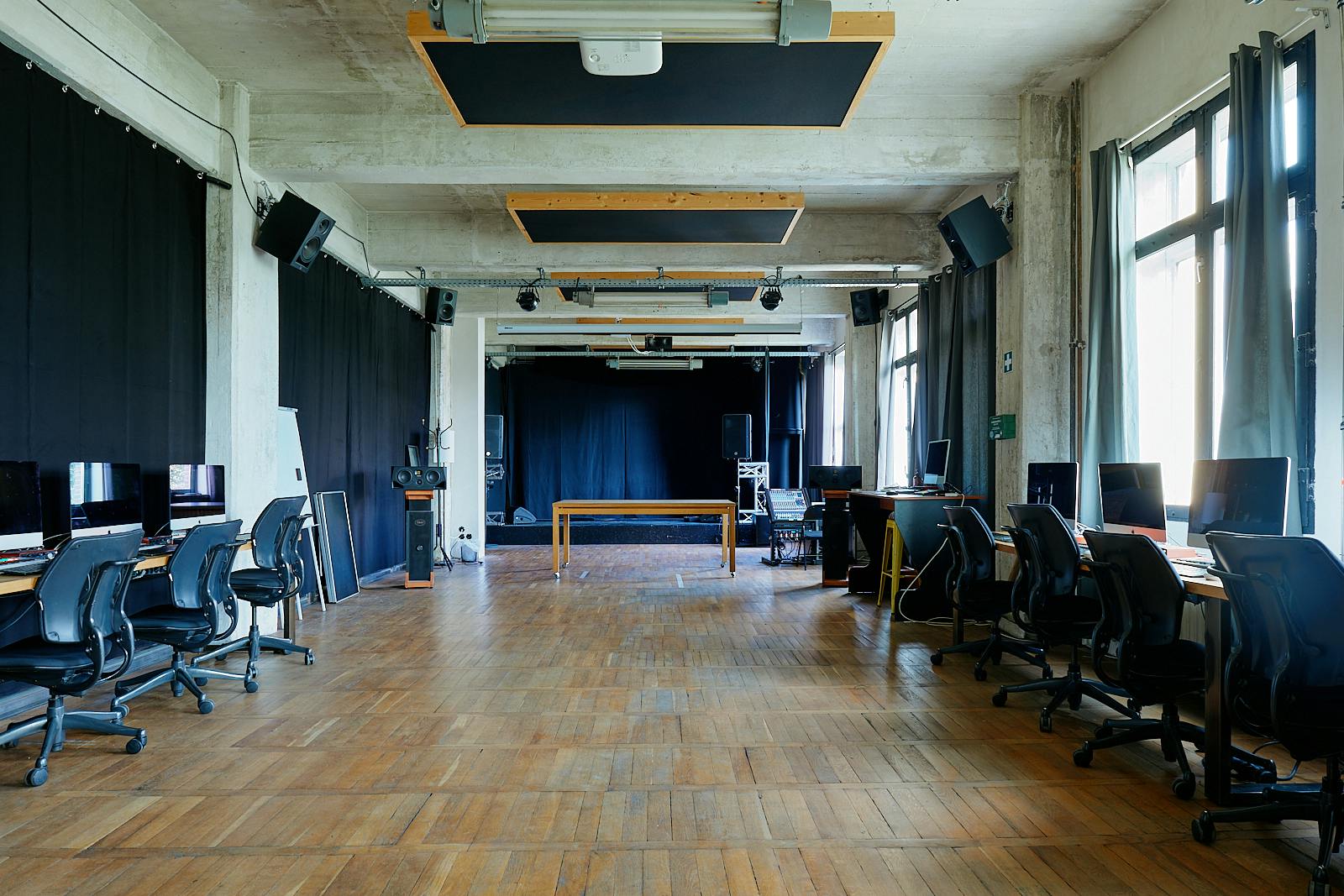
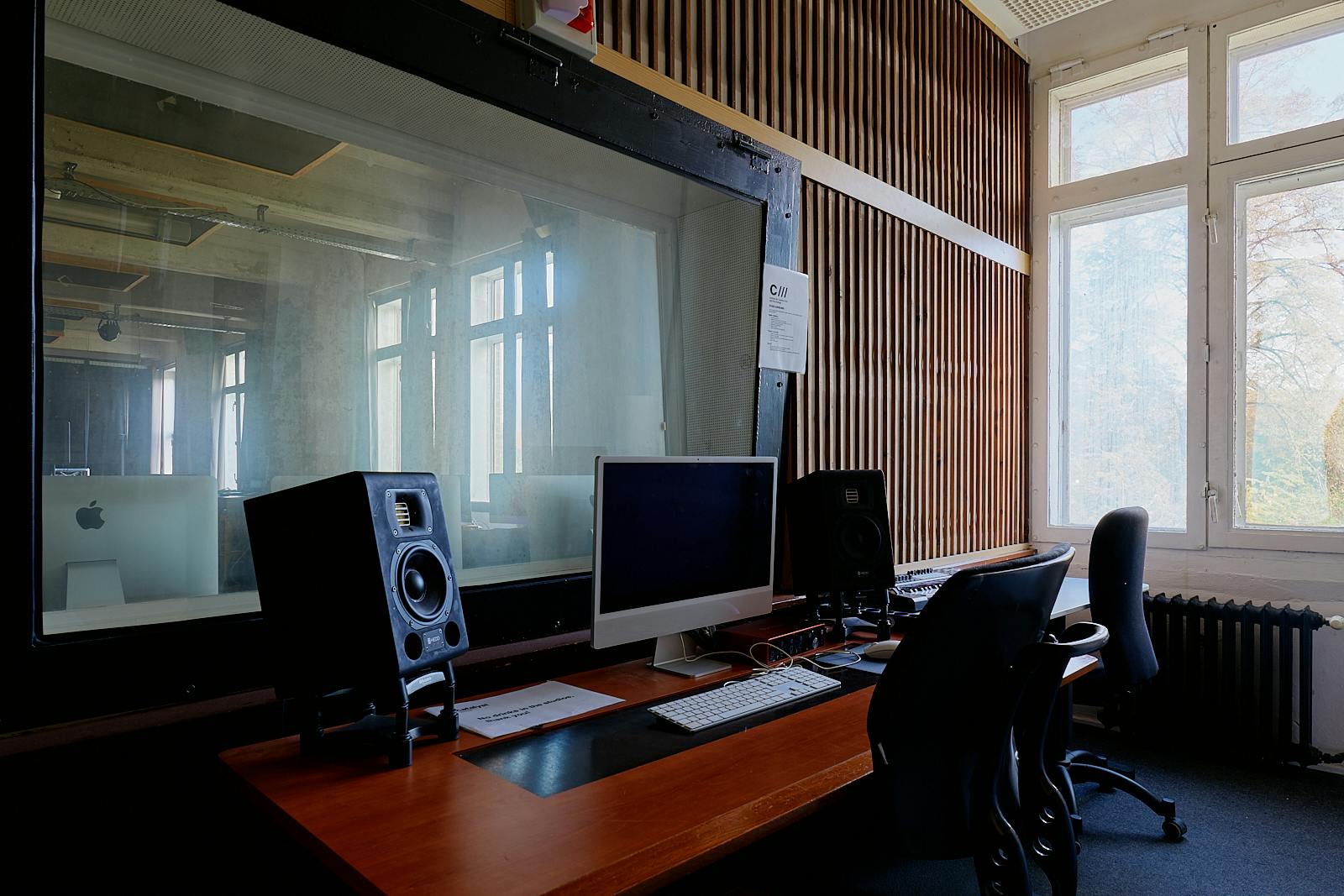
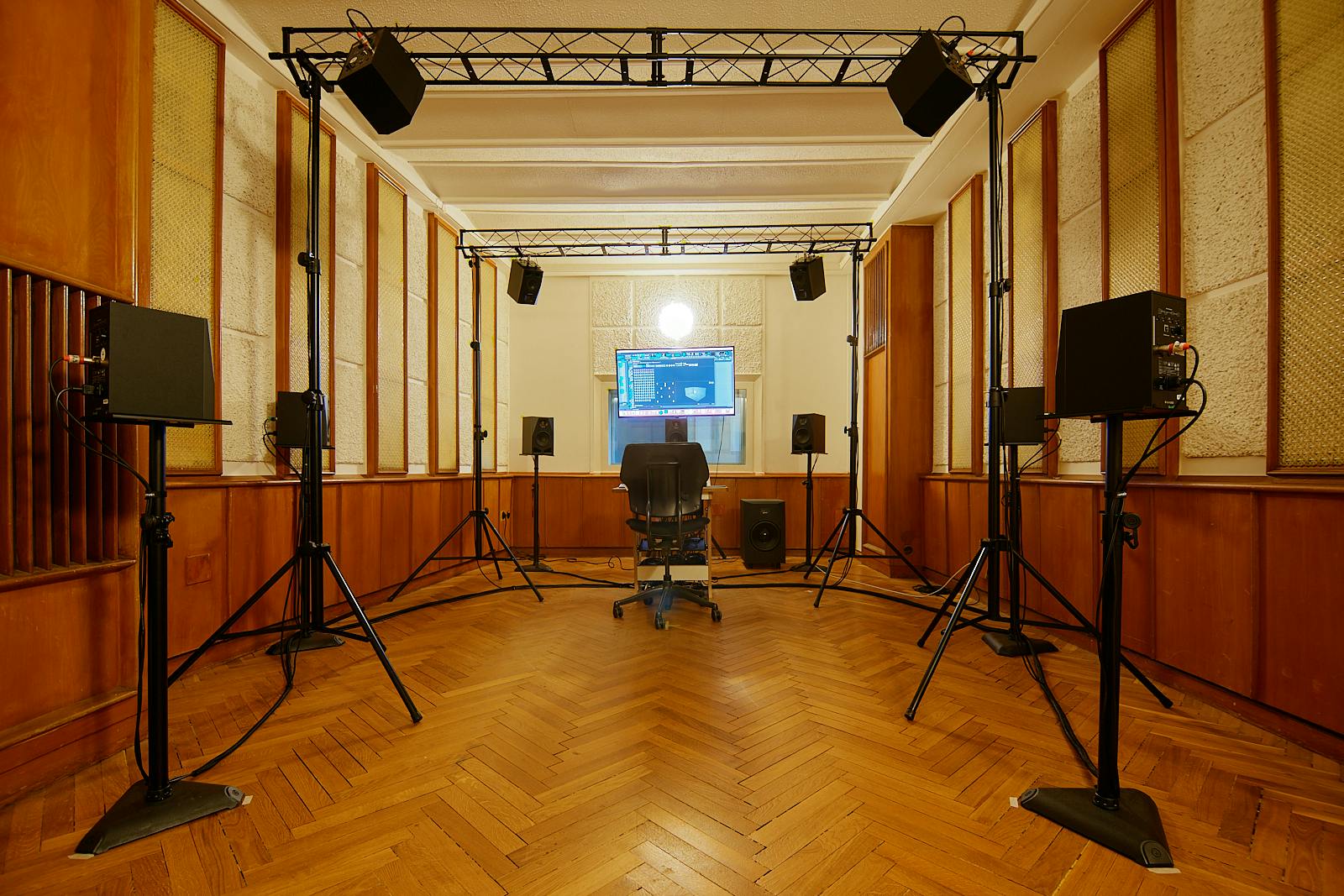
Your technological playground
Designed to support how you learn, create and perform – every detail of our spaces was built with our students in mind. Here are just a few highlights:




Course structure
Year 1 (HE Certificate)
In your first year, you focus on the core principles of making electronic music. Develop practical skills in recording, sequencing, synthesis, sampling, and mixing, alongside performance-focused work in studio and live performance contexts. You also begin to build stronger conceptual thinking through listening, analysis, and reflection, placing your practice within the cultural histories and current contexts of electronic music. Through guided projects and experimentation, you start shaping an artistic voice and a portfolio of finished work.
Learning Outcomes
By the end of Year 1, you will be able to:
- apply the fundamentals of recording, sequencing, synthesis, sampling, and mixing
- create, record, and perform original music using a range of hardware and software tools
- build a personal repertoire of musical ideas, techniques, and sound materials
- demonstrate critical awareness of electronic music’s cultural and professional contexts
- articulate your artistic direction and present your work to audiences
If you enrol in the HE Certificate, you complete Year 1 as a standalone qualification. You study alongside BA students and may apply to progress into Year 2 of the BA programme upon successful completion, subject to results and available places.
Year 2 (BA)
In your second year, you deepen and extend the foundation built in Year 1. The year deepens both technical practice and critical thinking: you develop advanced technical skills and musicianship, and learn to ask stronger questions that sharpen artistic direction, strengthen critical engagement, and make your work ready for public presentation. You engage with advanced synthesis, creative programming, instrument design, media-based composition, mastering, and performance, while developing a stronger critical awareness of your work within contemporary electronic music.
Learning Outcomes
By the end of Year 2, you will have developed:
- refined mixing and mastering approaches for high-quality recordings
- advanced synthesis and sound manipulation methods for composition and production
- the ability to design, build, and code original instruments, interfaces, and custom music tools
- creative programming skills for sound, composition, and performance systems
- stronger composition, production, and performance practice through more complex projects and presentations
- advanced critical listening, conceptual thinking, and analytical skills through reflection and discussion
- an understanding of professional pathways, and the ability to contextualise your work within wider musical cultures and industry contexts
Year 3 (BA)
In your final year, you bring together the technical, artistic, and critical development of the programme and apply it in more independent work. Year 3 is centred on self-directed projects, deeper responsibility for your process, and clearer articulation of artistic intention and context. You engage with critical enquiry and artistic research, develop substantial work from concept to public presentation, collaborate across disciplines, and prepare for professional practice in Berlin and beyond.
By the end of Year 3, you will have developed:
- the ability to manage and deliver independent projects from initial concept to public presentation
- a clearer artistic focus, and the ability to communicate your work and professional direction
- the ability to reflect on your projects and describe them professionally in writing
- experience of collaboration with peers and external partners, including professional contexts where relevant
- the ability to present work through performance and publication
- confidence in experimental approaches to electronic music production and performance, grounded in critical reflection
- professional, organisational, and interpersonal skills, including clear planning and project strategy, that support sustained independent practice
Is Electronic Music Production & Performance for me?
This course is for you if:
- want to explore your ideas through electronic music and related media practices
- are ready to move from DJ practice towards making and shaping your own music, recordings, and performances
- want to create, perform, and publish work in a distinctive artistic voice
- are fascinated by electronic sound creation and manipulation (synthesis, sampling, and processing), from fundamentals to advanced approaches
- are curious about different ideas and approaches to composing electronic music, and want to understand what makes them work
Annual Spatial Sound Forum
Experience immersive audio at our Spatial Sound Forum, a mini-festival of multichannel listening, live performances and hands-on demos – next edition in March 2027.
“The school has contributed enormously to my creative growth. Nothing is better than being able to spend three years on your craft and nothing but that.”
– Rowan Edwards aka Gozi, pop artist and EMP alumnus
Genre-agnostic, purposefully experimental
Electronic music is constantly evolving, and we treat that as a condition of study. We do not ask you to fit a style, a scene, or a market category. We focus on artistic development and critical awareness: how you think, how you work, and where you want to take your music.
Whether your practice draws on club culture, ambient approaches, experimental forms, or something entirely your own, we prioritise depth and direction over genre labels. We expect students to take risks, test ideas, and extend their creative range, while developing the ability to articulate and evaluate their choices.
Our workshops combine making with inquiry. We examine the reasons and contexts behind the work as closely as the techniques used to produce it. Through hands-on sessions, we connect tools and methods with purpose, giving meaning to your creative decisions.

Student experience
At Catalyst, you make music within a living ecosystem. Compose and produce in professional studios, refine performance work, and develop hybrid formats such as mixed media and interactive practice. Explore spatial sound, including octophonic systems, Dolby Atmos, and Ambisonics. Take part in guest sessions with musicians, producers, and performers, and turn ideas into well realised recordings and confident performances.
Stay connected through our extracurricular activities: Etikett Radio shows and workshops, the T.A.P.E. experimental ensemble, Artistry Connect meetups, and Guest Sessions with visiting artists (Berlin’s music scene means internationally recognised artists regularly pass through and work with our students). Present your music at listening parties, collaborate with filmmakers, actors, and audio-visual artists, and receive constructive feedback. Wellbeing support and coaching are also available to help develop sustainable working habits and maintain a healthy pace over the long term.

Progression & careers
Graduates of this programme may specialise in music composition and production, film, games, advertising, animation, and immersive media, or progress to postgraduate study (MA or PhD). Typical pathways include:
- Electronic music composer-performers
- Performance artists
- MA and PhD researchers
- Producers, remixers, and sound designers
- Live electronic musicians and performers
- Music technologists and instrument makers
- Audio engineers
- Curators and event producers
- Music writers, critics, and researchers
- Music publishers and label founders
- Freelancers and entrepreneurs working across audio and media
A key focus of the programme is sustainability: we support students in developing practices and professional habits that can carry a long career, not only a short sprint. Many graduates therefore build independent, long-term careers by combining disciplines, for example performance with teaching, installation practice with curating, or interdisciplinary audio-visual work with publishing and label work. Berlin’s internationally recognised music ecosystem offers frequent opportunities to present work publicly, connect with peers, and develop a professional profile.

A future-proof creative toolkit
Developing your practice means more than technical skill. Alongside growing competence with electronic instruments, recording studios, and performance environments, you develop ways of working that support long-term artistic development, including:
- Creative resilience and self-direction
- Collaboration and cross-disciplinary teamwork
- Critical listening and artistic risk-taking
- Communication and project management
These abilities help you stay responsive in a fast-changing field shaped by new technologies and constant cultural development. By graduation, you leave with a portfolio of work and the habits needed to keep developing your practice.

Admissions
Entry requirements
All applicants will be asked to provide: personal and educational information, documentation of their education experience, a portfolio and a personal introduction (which can be submitted as a written statement of motivation or a video/audio clip). Visit our How To Apply page for more detail.
MINIMUM ENTRY REQUIREMENTS
- Standard entry: graduation from high school at a level which would normally permit entry to university in the country where it was gained. This would be A-Levels in the UK and the Abitur in Germany, for example.
- Non-standard entry: We recognise that not all education happens in the classroom and it may be possible to admit you through a non-standard access route. If you do not possess the required formal qualification, but have acquired relevant professional or life experience, please contact our Admissions team.
If neither of the two categories above describe your situation, you'll most likely need to complete a short course to gain access to our 1 and 3-year HE degree courses.
- Language: The language of instruction in all our courses is English and applicants must demonstrate a level equal to IELTS 6 (equivalent to B2 in Germany and other EU countries). You can either submit a language certificate or can take our free 90 min online test.
For more information, please contact our Admissions team and we’d be happy to discuss your opportunities to come study with us.
Course dates and application deadlines
Applications open: 15 October 2026
Course start: Mid-September 2027
Visa-required applicants
Applicants from countries requiring a visa before entering Germany:
- Priority: 26 February 2027 (includes early enrolment bonus)
- General deadline: 30 April 2027 (subject to processing time and availability)
We are accepting applications until late May, but if you need a visa to study in Germany, we strongly recommend applying now, as processing times vary by country and can take several months.
EU/visa-exempt or post-arrival applicants:
Applicants from EU/EEA, Switzerland, or countries allowing visa-free entry (e.g. USA, Canada, Japan, South Korea):
- Priority: 31 March 2027 (includes bonus & guaranteed spot on preferred course)
- General deadline: 4 June 2027 (granted on a rolling basis)
- Late applications: until 31 August 2027 (subject to availability)
Priority deadlines & early enrolment bonus
Apply by the priority deadline to secure your place and receive a €1,000 discount on your total tuition.
🖤 Top-up your early enrolment bonus with a free hoodie when classes start, by applying before 31 December 2026!
What does “visa” or “visa-exempt” mean?
Financing and funding opportunities
As an officially accredited higher education institute based in Berlin, Catalyst offers access to a range of national funding opportunities for eligible students, including BAföG and other public financial aid schemes available across Germany and the EU.
- Visit our funding guide to explore the most common options available to our students, both in Germany and across Europe.
Early enrolment bonus
Apply by the priority deadline to secure your place and receive a €1,000/year discount on your tuition – totalling €3,000 across three years. Top-up your early enrolment bonus with a free hoodie by applying before 31 December 2026!
Multiple-course bonus:
If you decide to enrol in both a 4-week Summer Short Course and a degree course with us in within two years, you will receive a discount of 500€ on the total tuition.
Open days, Q&As and taster workshops
Get a feel for Catalyst and our courses at a range of both online and in-person events. Join us at a Virtual Open Day or an Open Day at our campus in Berlin, chat to our programme leads at Meet The Tutor, or try a taster workshop.
Submission requirements
When you're ready to apply, you'll need to upload your work to an online platform (such as Vimeo, Youtube, Tumblr, Soundcloud) so that we can review it online. We do not accept file download links. For each work, you’ll also need to add a short description in the application form (telling us the inspiration behind it and how you made it).
For Electronic Music Production & Performance we ask you to:
Share two pieces of original work that you have created using a DAW program.
- These tracks can be composed from new recordings, samples, or a combination of both, and should demonstrate that you can perform basic DAW operations (such as applying plug-in effects).
- We welcome music in any genre, sound art or other audio production, but we do not accept DJ mixes.
Tuition fees
Our fees are the same for all students, no matter where you come from, and stay consistent for throughout your studies. For a more detailed breakdown, please download our course guide.
| Tuition | With early enrolment bonus | Notes | |
|---|---|---|---|
| Tuition fees | Electronic Music Production & Performance | |||
| Per semester | 6,000€ | 5,500€ | Annual enrolment fee €895 |
| Per month | 1,083€ | 1,000€ | Annual enrolment fee €895 |
| Per year | 11,640€ | 10,640€ | 3% discount by paying each year upfront. Annual enrolment fee €895 |

“The EMP programme is a great option for people looking to develop and define a strong musical direction or identity. You can explore a huge variety of creative possibilities through access to facilities, teachers and the community that forms within classmates.”
– Dario Peris aka Promise, producer and EMP alumnus
Ways to connect
Whether in person or online, we can't wait to meet you!


Learn from the experts
Throughout the programme you’ll learn from industry-acclaimed experts in their field, with a passion for passing on their knowledge to others.
Your Programme Lead
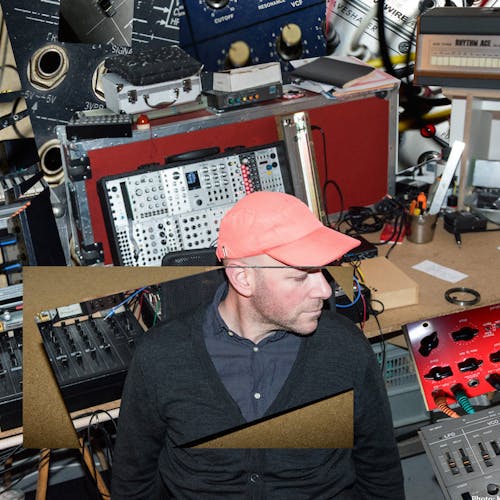
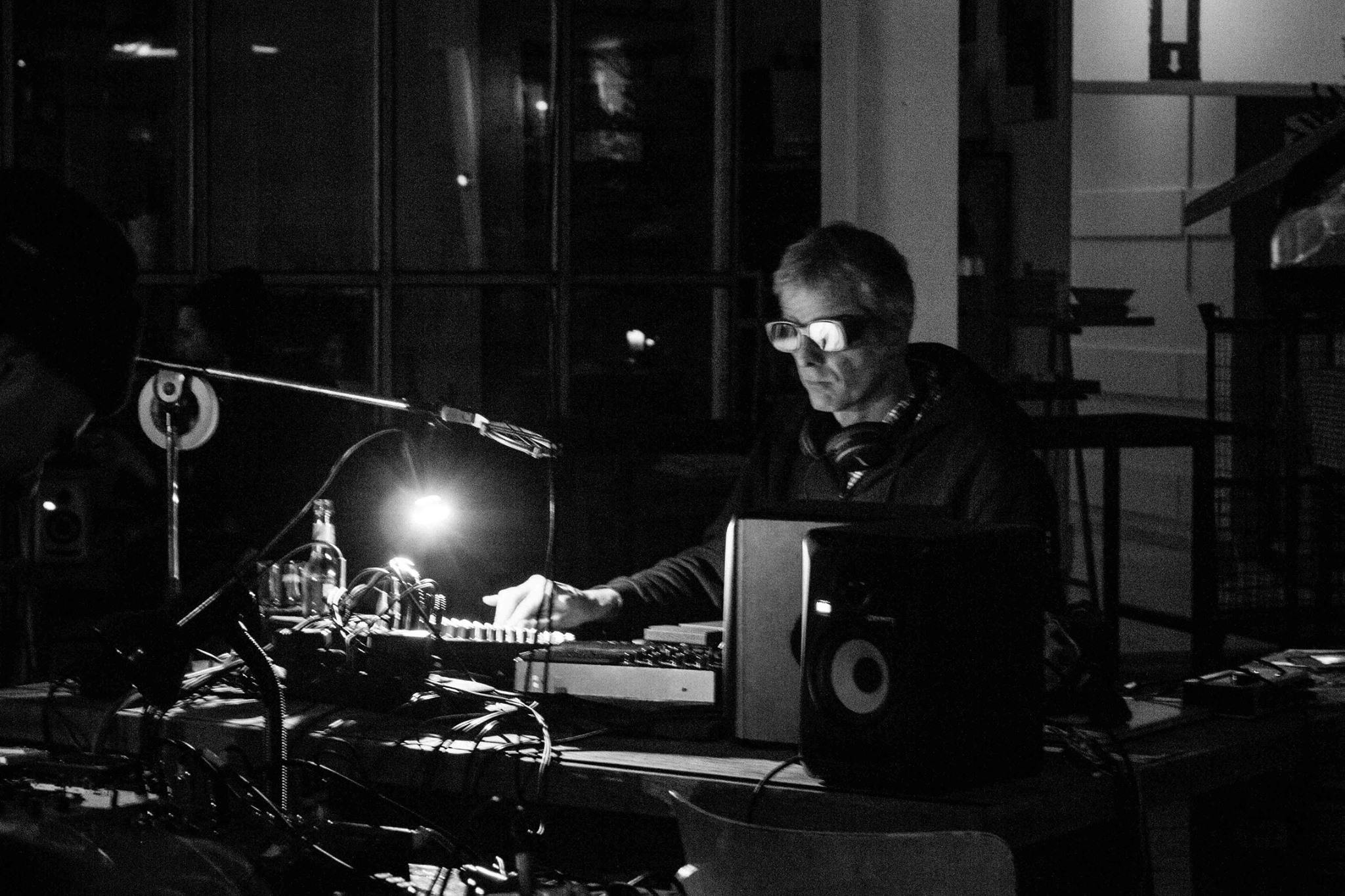
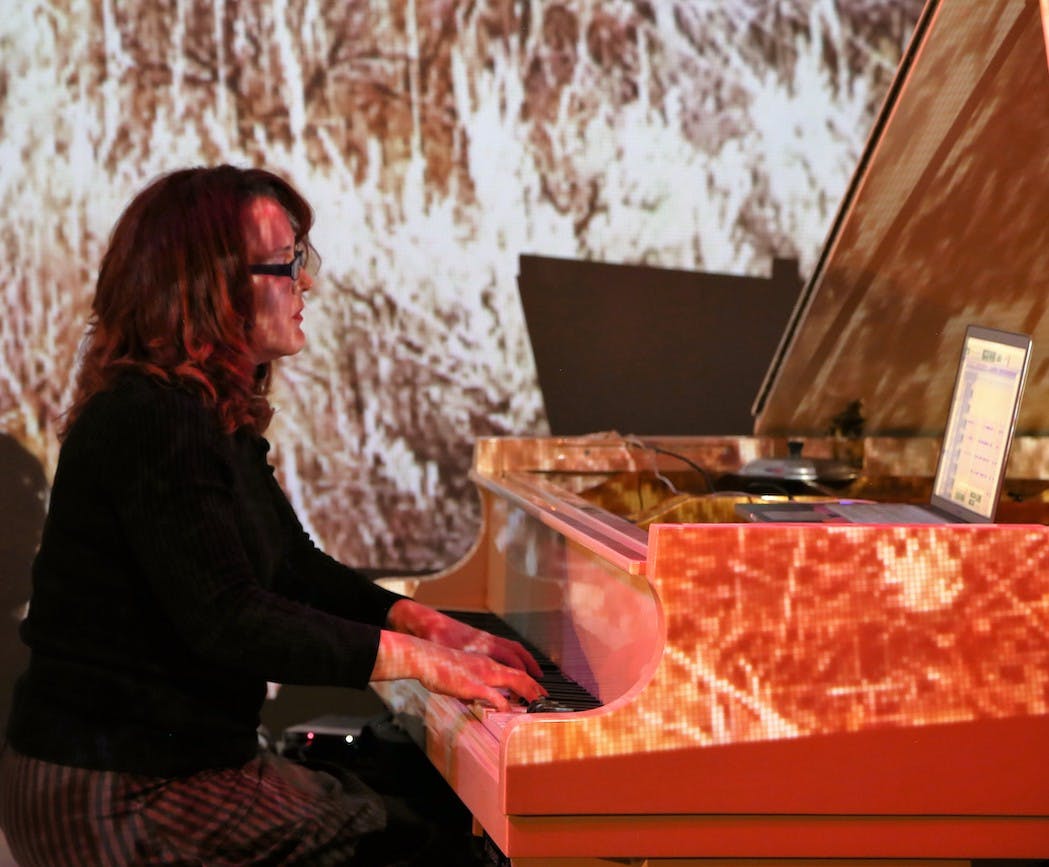
Eliad Wagner is a composer, performer, sound artist and educator with academic backgrounds in both physics and music. His work sits at the intersection of composition and performance, rhythm and noise, and explores improvisation, sound synthesis, music technology and alternative scoring.
Your Certificate Lead
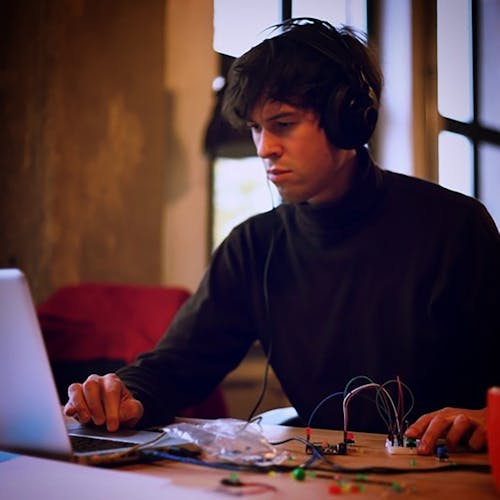
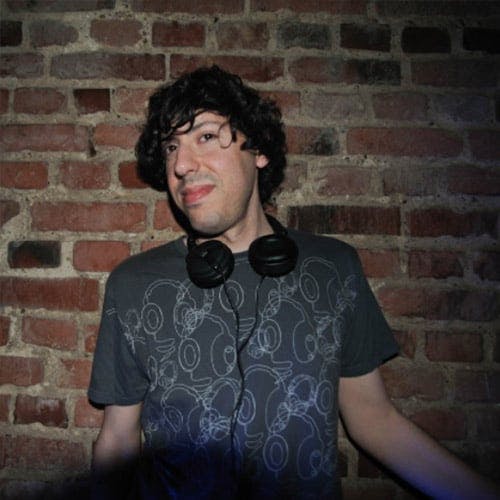
Ben Bacon is an educator and electronic music specialist who has called Berlin home since 2015. As Programme Lead for our first-year Electronic Music Production & Performance students, he shapes the curriculum and supports their creative development. He values Catalyst’s experimental vision and the inspiring team he works with daily.

Student work
In the end, it's our students’ work that counts. Listen to our Catalyst cassette series:
Tune in
Stories from our creative community